Executive editors: Brunella Bonaccorso, Animesh Gain, Margreth Keiler, Gregor C. Leckebusch, Paolo Tarolli & Uwe Ulbrich
Natural Hazards and Earth System Sciences (NHESS) is a not-for-profit interdisciplinary and international journal dedicated to the public discussion and open-access publication of high-quality studies and original research on natural hazards and their consequences. Embracing a holistic Earth system science approach, NHESS serves a wide and diverse community of research scientists, practitioners, and decision makers concerned with detection of natural hazards, monitoring and modelling, vulnerability and risk assessment, and the design and implementation of mitigation and adaptation strategies, including economical, societal, and educational aspects.
Journal metrics
NHESS is indexed in the Web of Science, Scopus, Google Scholar, etc. We refrain from displaying the journal metrics prominently on the landing page since citation metrics used in isolation do not describe importance, impact, or quality of a journal. However, these metrics can be found on the journal metrics page.
News
20 Aug 2026
In memory of Paola Reichenbach
It is with great sadness to let you know that our long-standing colleague and friend Paola Reichenbach passed away on 17 August 2026. Please read more. 
20 Aug 2026
In memory of Paola Reichenbach
It is with great sadness to let you know that our long-standing colleague and friend Paola Reichenbach passed away on 17 August 2026. Please read more.
13 Mar 2026
Get involved, become a referee, and help shape NHESS' community publication output
We are pleased to announce that a new referee application form is now available. This means that if you are interested in contributing to the peer-review process and supporting high-quality scientific publishing in your community then you can apply today to become a referee. Your expertise can make a difference. Visit the online form here to learn more and join our reviewer community.
13 Mar 2026
Get involved, become a referee, and help shape NHESS' community publication output
We are pleased to announce that a new referee application form is now available. This means that if you are interested in contributing to the peer-review process and supporting high-quality scientific publishing in your community then you can apply today to become a referee. Your expertise can make a difference. Visit the online form here to learn more and join our reviewer community.
27 Oct 2026
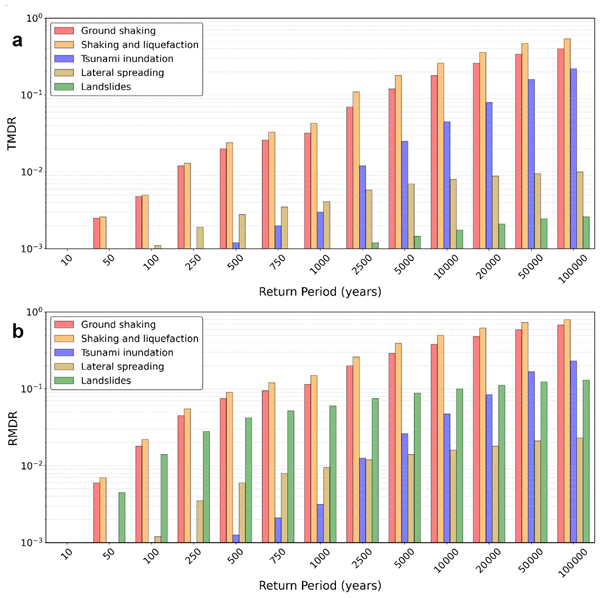
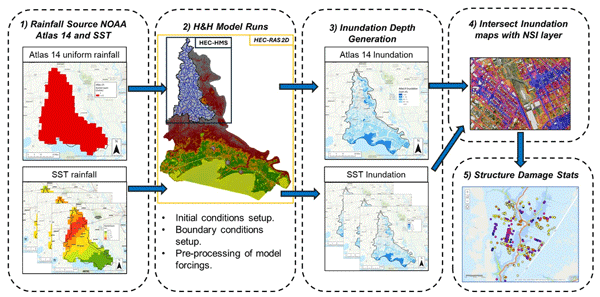
An internally consistent framework for calculating cascading probabilistic earthquake risk and its application to a case study in New Zealand
Jose Moratalla, David Burbidge, Jean Roger, Katie Jones, Angela Griffin, Christof Mueller, Uma Ashok, Finn Scheele, Yaseen Mahmood, and Edith Bretherton
Nat. Hazards Earth Syst. Sci., 26, 5261–5279, https://doi.org/10.5194/nhess-26-5261-2026,https://doi.org/10.5194/nhess-26-5261-2026, 2026
Short summary
23 Oct 2026
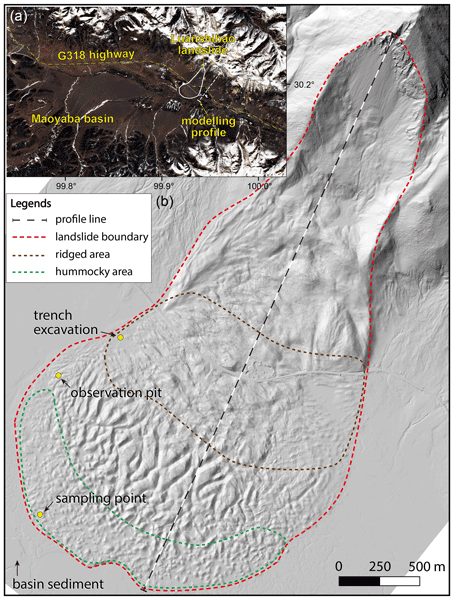
Runout mechanism of landslides in alluvial basins with emphasis on the impact and erosion effects
Ye Chen, Fawu Wang, Maximillian Van Wyk de Vries, Weichao Liu, Bo Zhang, and Changbao Guo
Nat. Hazards Earth Syst. Sci., 26, 5185–5200, https://doi.org/10.5194/nhess-26-5185-2026,https://doi.org/10.5194/nhess-26-5185-2026, 2026
Short summary
Highlight articles
24 Sep 2026
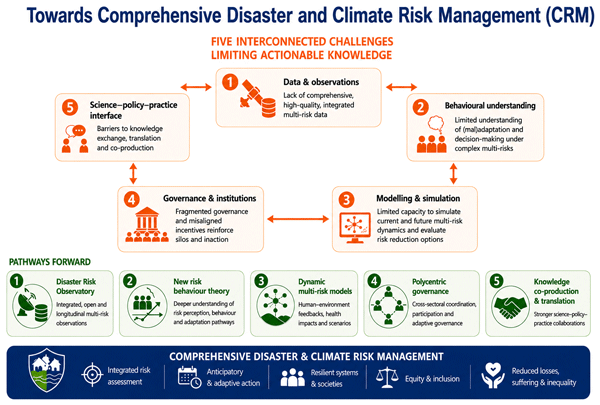
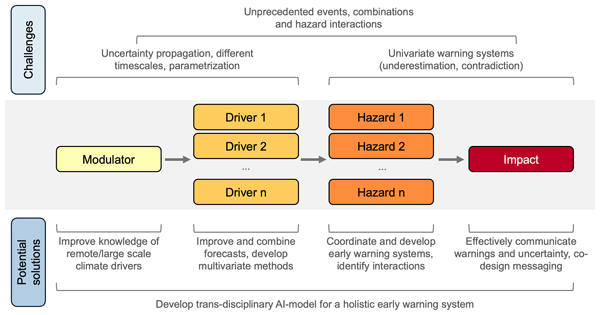
Invited Perspectives: Science for Comprehensive Disaster and Climate Risk Management
Philip J. Ward, Marleen C. de Ruiter, Kees Boersma, Tomris Cesuroglu, Nathan Clark, Tina Comes, Ashok Dahal, Sonja Fransen, Jasper Verschuur, Carmen Anthonj, Srijith Balakrishnan, Jens de Bruijn, Eefje Hendriks, Rodrigo Mena Fluhmann, Goda Perlaviciute, Linda Steg, Marc J. C. van den Homberg, Cees van Westen, Funda Atun, Anja Schreijer, and Nicole van Maanen
Nat. Hazards Earth Syst. Sci., 26, 4589–4609, https://doi.org/10.5194/nhess-26-4589-2026,https://doi.org/10.5194/nhess-26-4589-2026, 2026
Short summary

17 Sep 2026
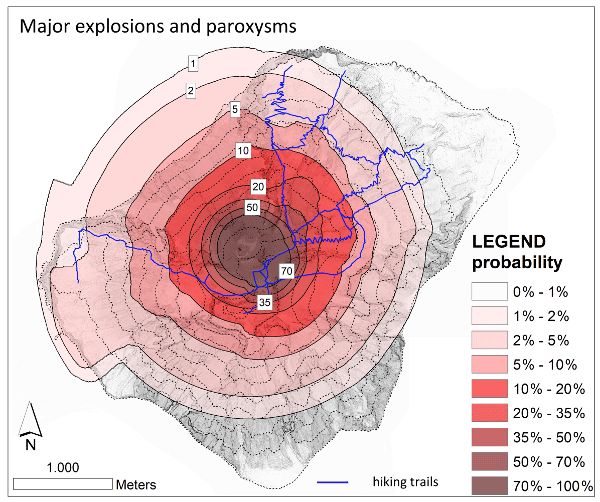
Ballistic projectile hazard of major explosions and paroxysms at Stromboli (Italy) with uncertainty quantification – Part 2: Conditional and temporal probability maps
Andrea Bevilacqua, Augusto Neri, Patrizia Landi, Paola Del Carlo, Massimo Pompilio, and Peter Baxter
Nat. Hazards Earth Syst. Sci., 26, 4503–4527, https://doi.org/10.5194/nhess-26-4503-2026,https://doi.org/10.5194/nhess-26-4503-2026, 2026
Short summary
07 Sep 2026
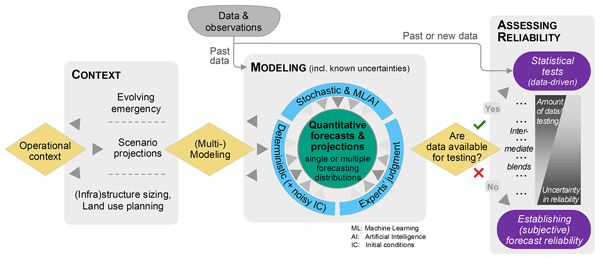
Invited perspectives: Towards usable compound event research
Kai Kornhuber, Emanuele Bevacqua, Mariana Madruga de Brito, Wiebke S. Jäger, Pauline Rivoire, Cassandra D. W. Rogers, Fabiola Banfi, Fulden Batibeniz, James Carruthers, Carlo De Michele, Silvia De Angeli, Cristina Deidda, Marleen C. de Ruiter, Andreas H. Fink, Henrique M. D. Goulart, Katharina Küpfer, Patrick Ludwig, Douglas Maraun, Gabriele Messori, Shruti Nath, Fiachra O'Loughlin, Joaquim G. Pinto, Benjamin Poschlod, Alexandre M. Ramos, Colin Raymond, Andreia F. S. Ribeiro, Deepti Singh, Laura Suarez Gutierrez, Philip J. Ward, and Christopher J. White
Nat. Hazards Earth Syst. Sci., 26, 4309–4334, https://doi.org/10.5194/nhess-26-4309-2026,https://doi.org/10.5194/nhess-26-4309-2026, 2026
Short summary

More highlight articles
All EGU highlight articles
Notice on APC invoices
In accordance with current European restrictions, Copernicus Publications does not step into business relations with and issue APC invoices (articles processing charges) to Russian and Belarusian institutions. The peer-review process and scientific exchange of our journals including preprint posting is not affected. However, these restrictions require that the first contact (contractual partner of Copernicus) has an affiliation and invoice address outside Russia or Belarus.